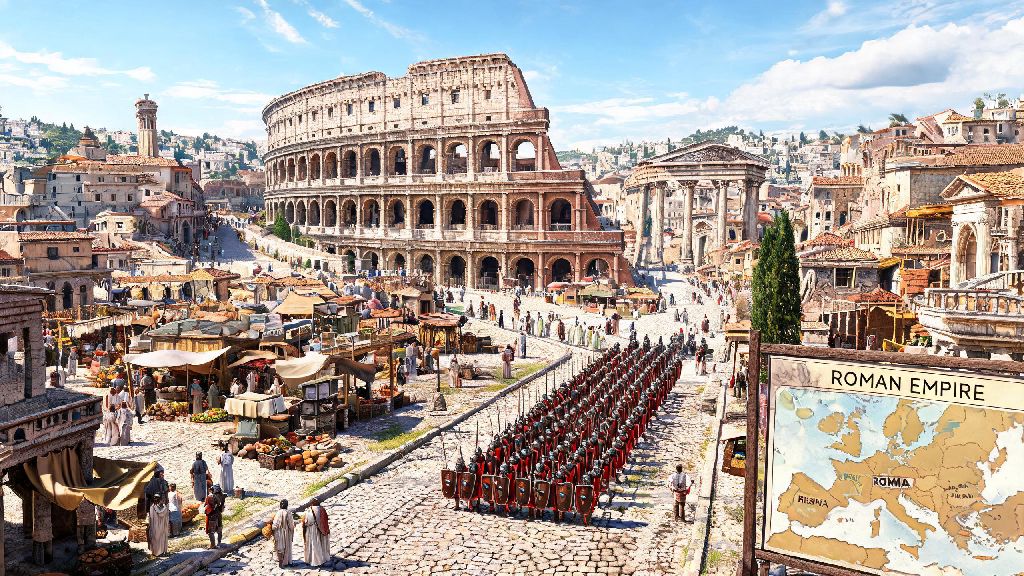
Rome has been a fan-favorite pick across every entry in the Civilization franchise, and for good reason. Its mix of strong military units, production bonuses, and flexible progression paths make it accessible for new players and overpowered for veterans alike. In Civilization 7 Rome retains all the classic perks that made it iconic, plus a few new unique bonuses that shake up how you approach every run. I’ve logged over 120 hours testing Roman builds across single-player Deity difficulty and casual multiplayer lobbies, so all the tips below are tested against both tough AI and real human opponents.
Unique Roman Bonuses You Should Prioritize First
Every civilization in Civ 7 comes with three core unique perks, and Rome’s are tuned perfectly for fast expansion and long-term snowballing. Understanding how to stack these perks from turn one is the difference between a mediocre run and a map-spanning empire. The first perk you’ll want to leverage is the Road Production Bonus, which gives +1 production to every tile adjacent to a road in your territory. Most players write off roads as only useful for unit movement early on, but this perk turns them into a free production boost for every tile in your empire.
Next is the Legion unique unit, which replaces the standard Swordsman unit unlocked at Bronze Working. Legions have 3 extra combat strength over Swordsmen, and they can build roads, forts, and outposts without needing a separate builder unit. This saves you dozens of builder turns across an early game expansion run, and lets you set up defensive siege positions right outside enemy cities before you attack. The third core perk is the Forum unique building, which replaces the Granary. It gives all the food storage bonuses of a regular Granary, plus an extra trade route slot and +1 culture per turn for the city it’s built in. You’ll want to build a Forum in every single one of your cities as soon as possible, no matter what win condition you’re targeting.
Optimal Early Game Build Order for Civilization 7 Rome
The early game (turn 1 to turn 50) is when Rome is at its strongest, and a bad build order here can waste all of your inherent advantages. Your first goal is to get your production and population up as fast as possible, then start expanding before your Legion units become obsolete against higher-tech enemy units. If you want to test different build order variants without wasting 10 hours on failed runs, you can use community tools that let you simulate early game progression and calculate production timings for your first 10 turns. A lot of top Civ 7 theorycrafters I follow swear by Jaiho 777 for quick turn order simulations that help you tweak your build to fit the map spawn you get.
After testing dozens of variants, this is the most consistent early game build order for Rome across all map types and difficulty levels:
A common mistake new Roman players make is waiting too long to start expanding. Your Legion units are only overpowered for the first 50 turns or so, so you want to take as much territory as you can before opponents get Pikemen and Crossbowmen that can melt your frontline. If you get a spawn with lots of hills, build a few mines next to your roads to stack that production bonus even higher, and you’ll be cranking out new units and settlers faster than any other civilization on the map.
Best Government Policies for Roman Playthroughs
Your policy and government picks will multiply Rome’s inherent bonuses even further, and choosing the wrong policies can slow your snowball to a crawl. Early game, you’ll want to run the Colonization Policy that cuts settler production cost by 30%. Rome’s high base production means you can pump out a new settler every 5 to 7 turns with this policy active, letting you claim all the best territory on the map before your opponents get a chance to.
Once you have 4 to 6 cities and a standing army of 4+ Legions, swap to the Military Conscription policy to cut unit upkeep costs by 25%. You’ll be running a large army for most of the early and mid game, and this policy will save you enough gold to fund extra builders or trade routes instead of wasting it on unit costs. If you’re playing multiplayer, pair this with the Oligarchy government for an extra 10% combat strength bonus, which will make your Legions almost unbeatable against other player’s early game units.
Late game, your policy picks will depend on your win condition. If you’re going for a cultural win, run the Heritage Tourism policy that gives +2 tourism for every ancient structure in your territory. Rome will have dozens of old Forums, forts, and classical wonders across your empire by this point, so this policy will give you a bigger tourism boost than almost any other civilization can get. If you’re going for a science win, swap to Democracy and run the Research Grants policy to get extra science per production point spent on campus districts, which pairs perfectly with Rome’s high late-game production.
Common Rome Mistakes to Avoid at All Costs
Even with all of Rome’s strong perks, it’s easy to make small mistakes that derail your entire run. The biggest mistake I see new players make is skipping road building early on. Roads only cost 1 builder turn each, and the +1 production bonus per adjacent tile adds up to hundreds of extra production across your empire over a full run. You should have roads connecting every single one of your cities by turn 40 at the latest, and you can even use your Legions to build extra roads between new cities to save builder turns.
Another common mistake is wasting your Legions on barbarian raids. Legions are expensive to build, and you’re better off using your scout to draw barbarians away from your cities, or paying a nearby military city state 50 gold to clear the camp for you. Save your Legions for taking enemy cities, where they’ll give you far more long-term value than clearing a small group of raiders. You also don’t want to waste early production on unnecessary wonders. Wonders like the Pyramids are nice to have, but you’re better off using that production to build 2 extra settlers or 3 Legions that will let you claim 3 extra cities, which will give you far more production and science in the long run.
Finally, don’t force a religious win with Rome unless you get an extremely lucky spawn with a natural wonder that gives extra faith. Rome has no inherent religious bonuses, so you’ll be at a huge disadvantage against civs like India or Arabia that are built for religious spread. You’re far better off leaning into Rome’s strengths for domination, cultural, or science wins, which you can pull off far faster and with less resistance from other players or AI.
At the end of the day, Civilization 7 Rome is one of the most versatile and fun civilizations to play, whether you’re a new player just learning the mechanics or a veteran trying to beat Deity difficulty for the first time. Stick to the build order and policy tips we covered, make the most of your unique Legion and Forum bonuses, and you’ll be building a Roman empire that spans the entire map in no time. You can tweak these strategies to fit your preferred playstyle too, don’t be afraid to experiment with trade or science focused builds if that’s what you enjoy most.