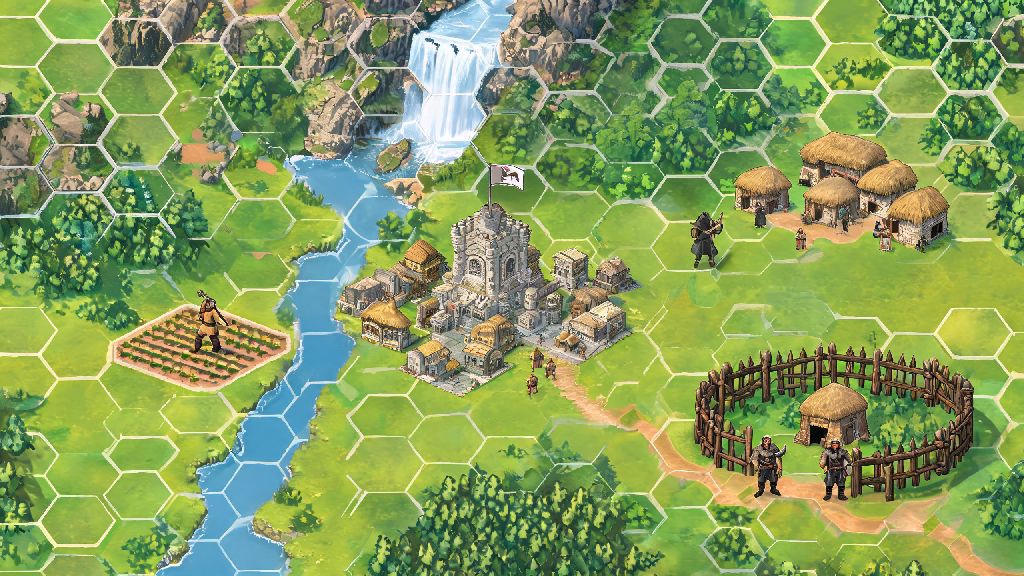
If you’ve ever spent 3 hours on a Civ 7 run only to get overrun by barbarians by turn 40, or fall so far behind on science that the AI launches its space station before you unlock industrialization, you’re not alone. I’ve put 200+ hours into the game across 120+ runs on every difficulty level, and pulled together these civilization 7 guides to help you skip the frustrating trial and error most new players go through. No overly complicated min-maxing tricks required, just actionable advice that works for every playstyle and faction.
Core Civilization 7 Guides for Early Game Survival
Your first 20 turns set the tone for your entire run, so small mistakes here will snowball into huge problems later on. Always prioritize building a scout and builder first before any other units or buildings – scouts find tribal villages, natural wonders, and barbarian camps fast, while builders lock in resource bonuses before neighboring civs claim them. Don’t waste production on a warrior unless you spawn directly next to an active barbarian camp; your starting warrior is enough to handle small raiding parties for the first 15 turns.
These civilization 7 guides for early game are built on dozens of Deity difficulty runs, so they’ve been tested against the toughest AI the game has to offer. Follow these non-negotiable rules for every start:
A lot of new players make the mistake of expanding too fast, building 4+ cities by turn 40 and ending up with negative gold income that forces them to disband military units or sell off critical resources. 3 well-placed cities with strong production will outperform 6 poorly placed ones every single time, so don’t rush expansion just for the sake of having more territory. Place your capital on a tile with at least 2 food and 1 production if you can; moving it one tile at spawn costs nothing and saves you 10+ turns of slow growth later.
District Placement Strategies to Maximize Yields
Districts are the backbone of every strong Civ 7 run, and bad placement is the number one reason players fall behind on science or culture wins by the mid game. Always plan 3+ districts ahead when you lay out your city zones – adjacency bonuses stack, and you don’t want to waste a perfect spot for a campus by plopping a commercial hub there first. For example, a campus next to a mountain and two rainforests gives you +4 science right off the bat, which is the equivalent of 2 extra scientists working for free for the entire game.
Don’t forget that government policy cards can drastically boost your district output if you match them to your playstyle. Run the Research Grants policy card as soon as you unlock it if you’re going for a science win – it doubles all campus adjacency bonuses for 10 turns, which can push you ahead of the AI by an entire era if you use it at the right time. If you’re playing a warmonger civ, you can skip culture districts entirely until you’ve conquered 2-3 enemy cities; you can steal great works and cultural landmarks from defeated opponents instead of wasting production building them yourself.
You don’t need to build every type of district in every city. Focus on 1-2 district types per city based on its natural tile bonuses; a city surrounded by hills should focus on industrial zones and encampments, while a city next to coastal tiles and natural wonders should focus on harbors and culture districts.
War and Diplomacy Tactics for Mid Game Domination
The mid game (turn 80 to 150) is where most runs either take off or fall apart, especially if you’re playing against aggressive civs like Rome or the Zulu. You don’t have to go to war if you don’t want to, but you should always have a standing army of at least 3 melee units and 2 ranged units by turn 80 to deter surprise attacks. The AI is far more likely to declare war on you if it sees you have no military units to defend yourself, even if you’ve had a positive relationship with it for the entire game.
Never declare war without first denouncing your target 5 turns in advance – this cuts the diplomatic penalty for warmongering in half, so other neutral civs won’t immediately gang up on you and impose trade sanctions. If you’re playing a peaceful civ, focus on forming defensive pacts with 2-3 strong neighboring civs early on; they’ll back you up if someone declares war on you, and you won’t have to spend half your production on military units that don’t contribute to your victory path.
For players going for a domination win, prioritize taking enemy capital cities first, not random small outposts. Capturing a capital gives you all of that civ’s great works, luxury resources and technology boosts, and effectively removes them as a threat for the rest of the game. Don’t hold onto cities that are far from your core territory if they’re causing constant unrest; you can raze them or give them to a friendly civ as a gift to boost your relationship score significantly.
Late Game Victory Path Tips to Avoid Last Minute Losses
There’s nothing more frustrating than being 10 turns away from a science win only to get nuked by an AI civ you forgot about, or lose a cultural vote because you ignored tourism output for the entire game. First, always keep an eye on every other civ’s victory progress in the top right menu; if someone is 15 turns away from a cultural win, you can sabotage them by stealing their great works, or declaring a small war to disrupt their tourism output long enough to hit your own victory goal first.
If you’re going for a science win, make sure you have at least 6 missile defense systems placed across your core cities before you start building the final space station parts. AI civs love to launch surprise nuke attacks when they see you’re about to win, and a single nuke hitting your main production city can set you back 20+ turns. For diplomatic wins, don’t waste your favor on small, meaningless votes; save all of your diplomatic favor for the final victory vote, and bribe other civs with gold or luxury resources to get them to vote for you if needed.
If you’re going for a culture win, make sure you have open borders with every other civ on the map. Open borders boost your tourism output by 20% per civ, which cuts the time you need to hit the required tourism threshold by almost a third. You can also trade for great works from friendly civs if you don’t want to spend production building culture districts and wonders to get them yourself.
At the end of the day, Civ 7 is all about adapting to the hand you’re dealt, not following a strict step-by-step plan. You might spawn next to a hostile civ that ruins your early game plans, or find a natural wonder that gives you a huge unexpected boost that changes your entire playstyle. These civilization 7 guides are meant to give you a solid foundation to build on, so you can spend less time stressing about bad decisions and more time having fun building your perfect empire. Don’t be afraid to experiment with different civs and playstyles; some of my best runs have been when I threw all the “rules” out the window and tried something totally new.