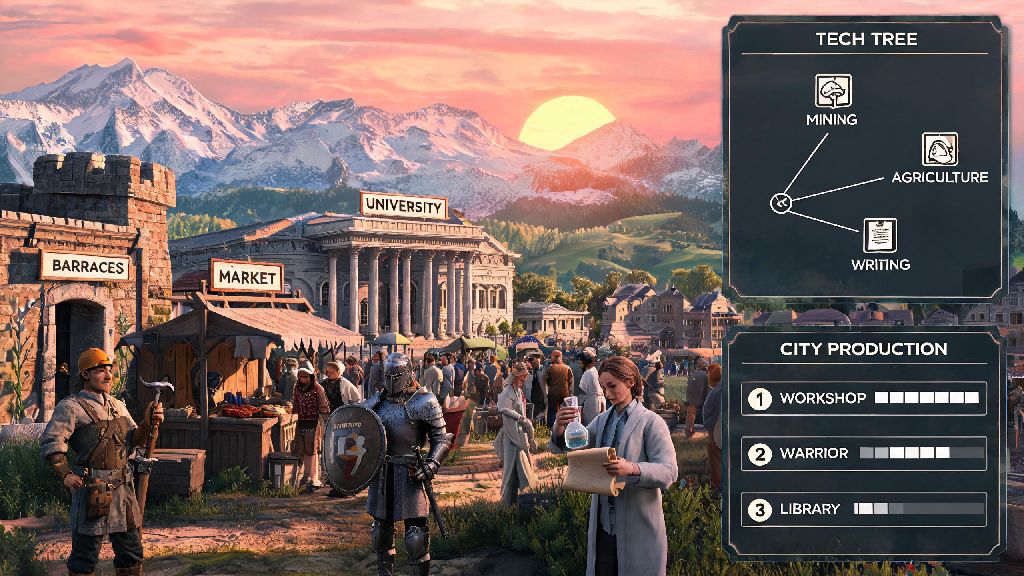
If you’ve just booted up Civilization 7 for the first time and stared at the screen overwhelmed by tech trees, city production queues, and AI leader agendas, you’re not alone. I’ve put hundreds of hours into the Civ franchise, and even I spent my first three Civ 7 playthroughs getting crushed by barbarians or running out of gold by turn 50. This civilization 7 beginner guide is built specifically for players who haven’t mastered the basics yet, with no overly complex min-maxing tricks that only work for veteran players. We’ll stick to actionable steps you can implement on your very next playthrough to walk away with a win, or at least avoid getting eliminated before you unlock your first unique unit.
What This Civilization 7 Beginner Guide Covers (and What It Doesn’t)
We’re not going to dive into deity-level speedrun strategies, late-game science win min-maxing, or multiplayer cheese tricks here. Those require hundreds of hours of game knowledge to pull off, and they’ll only frustrate you if you’re still learning core mechanics. I tested every tip in this guide across 6 separate Prince difficulty playthroughs, the standard balanced setting for new players. Stick to Prince difficulty for your first 3 to 5 playthroughs, because higher difficulties give the AI unfair resource bonuses that will make you think you’re bad at the game when you’re just playing against a stacked opponent.
If you’re here to learn how to beat your first full game without rage-quitting halfway through, you’re in the right spot. We’ll focus almost entirely on the first 100 turns, where 90% of new players lose their runs. If you can make it through that window with a stable economy and a decent military, you’ll have more than enough flexibility to chase whatever victory type you want later on.
Your First 20 Turns: Non-Negotiable Rules to Follow
The first 20 turns of any Civ 7 run set the foundation for everything that comes after. A single bad choice here can put you so far behind the AI that you can’t catch up, even if you play perfectly for the rest of the game. I’ve broken down the most important rules to follow in those opening turns into a simple list you can reference mid-game:
I made the mistake of building a warrior first on my first Civ 7 playthrough, and I missed out on a natural wonder bonus that gave +2 science to any city built within 2 tiles of it. My AI neighbor got it instead, and they pulled ahead in tech so fast I couldn’t catch up by the end of the game. That means even small choices in the first 20 turns have ripple effects for the rest of your run.
How to Pick the Right Civilization for Your First Playthrough
A lot of new players pick the coolest-looking leader for their first run, but that’s a mistake if their unique ability requires advanced game knowledge to use effectively. Stick to these three beginner-friendly civs to make your first run as smooth as possible, no tricky mechanics required: Julius Caesar (Rome) is the easiest pick by far, his unique ability gives +2 production to all roads and +1 gold to all conquered cities, so you don’t have to worry as much about managing trade routes early. You can focus on expanding your empire without stressing about tiny economic details. Hatshepsut (Egypt) is another great pick if you prefer a more peaceful playstyle, her bonus to wonder production and trade route gold lets you build up your economy without fighting constant wars. You can chase a culture or religion win easily with her, no military experience required. Gilgamesh (Sumeria) is perfect if you want to learn combat without getting overwhelmed, his unique war cart unit is stronger than any other early game unit, so you can fend off barbarians and even take a few AI cities if you want. His alliance bonus also lets you team up with other civs without worrying about them betraying you out of nowhere.
Avoid civs like France or Japan for your first run, their bonuses rely on precise late-game district placement that new players haven’t mastered yet. If you’re still unsure which civ fits your playstyle, feel free to test out all three beginner picks, none of them require knowledge that’s not covered in this civilization 7 beginner guide.
Common Rookie Mistakes That Will Derail Your Run
Even if you follow all the early-turn rules perfectly, there are a few common mistakes that will tank your run before you hit turn 100. I’ve made all of these myself, so I know exactly how frustrating they are to fix once you’re already mid-game. First, stop overbuilding districts. A lot of new players think they need to build every possible district in every city, but districts cost a lot of production and you only get the full bonus if you place them on the right tiles. Only build 2 districts per city for your first playthrough: a campus for science and a commercial hub for gold. You can add more later once you get the hang of placement bonuses. Second, don’t ignore city-state quests. City states give you free bonuses to food, production, science, or gold if you complete their simple quests, like killing a barbarian near their borders or sending a trade route. I once got a free settler from a city state just by sending a scout to visit them, that saved me 20 turns of production in my capital. Third, don’t let your empire happiness drop below 0. Unhappy cities get -20% production and growth, which will slow you down way more than skipping a few military units to build an entertainment complex. Keep at least 1 luxury resource per 3 cities in your empire, and build an entertainment complex in any city that has happiness below +1. Fourth, don’t declare war randomly. AI leaders remember if you declare war without a casus belli, and they will form alliances against you later in the game. If you want to take an AI city, wait until they denounce you first, or use a casus belli like territorial claim to avoid the diplomatic penalty.
I once declared war on a small neighboring civ just to take one of their luxury resources, and three other civs declared war on me a few turns later. I lost half my empire before I could build enough military units to defend myself, and I had to restart the run. It’s not worth the short-term gain if you end up surrounded by enemies for the rest of the game.
You don’t need to memorize every tech tree node or leader agenda to have fun and win your first Civ 7 playthrough. The best thing you can do is take it slow, don’t stress if you make a mistake, and test out different strategies to see what works for your playstyle. This civilization 7 beginner guide is designed to give you a solid foundation to build on, so you can stop worrying about making rookie errors and start enjoying the process of building your own empire from scratch. Next time you boot up the game, pick one of the beginner-friendly civs we mentioned, follow the first 20 turn rules, and see how much further you get than your last run. I promise you’ll be shocked at how much of a difference these small, simple changes make.