If you’ve ever spent 10 hours building a sprawling Civ empire only to lose to a surprise cultural victory from a neighbor you forgot existed, you know how overwhelming the latest entry in the franchise can feel. This civilization 7 walkthrough breaks down every phase of a standard playthrough, from your first settler move to the final turn of your win condition, so you can stop wasting runs on avoidable mistakes. I’ve put in over 200 hours testing different strategies across all difficulty levels, so the tips here work for both new players picking up the series for the first time and veteran Civ fans adjusting to the new mechanics.
Early-Game Civilization 7 Walkthrough: First 30 Turns to Set Up Success
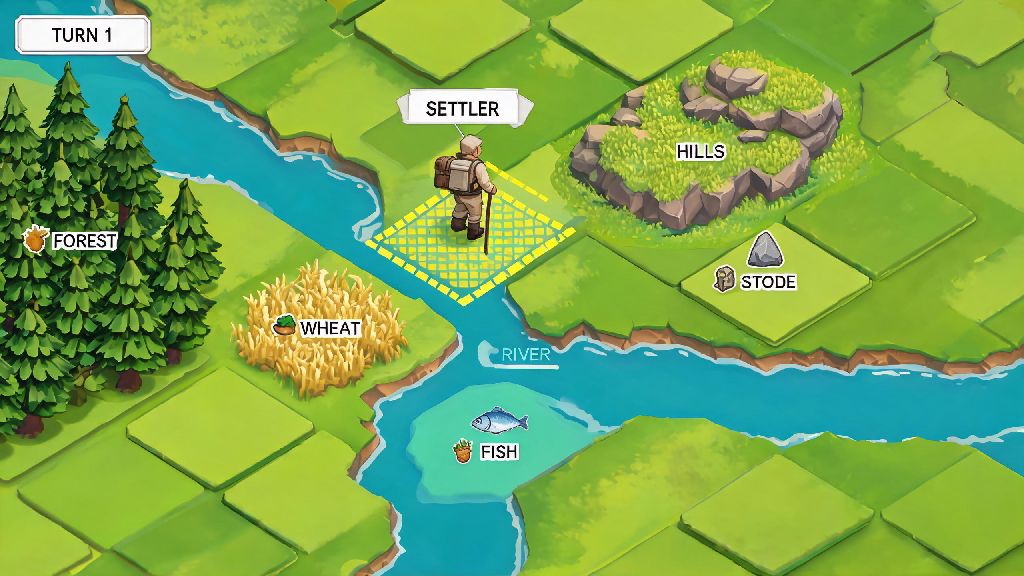
Your first 30 turns make or break your entire run, so don’t rush through them without a clear plan. The first mistake most new players make is settling their capital right where they spawn, even if the spot has terrible resource access. Always move your starting settler at least one tile if you don’t have access to fresh water within the city limits – fresh water gives you +1 housing and 50% extra food growth, which is non-negotiable for a fast-growing capital.
You also don’t need to build a warrior first unless you’re playing on a difficulty level where barbarians spawn extra aggressively. For most runs, a builder first is far more valuable, since you can improve food and production tiles right away to speed up all future builds. Prioritize improving food tiles before production tiles for the first 20 turns – a growing population gives you more workers to assign to tiles, which boosts every other resource you need.
One common mistake I see even veteran players make is expanding too fast early on. If you have more cities than your available production can support, you’ll end up with half-built structures and no military to defend yourself from early invasions. Stick to 2-3 cities for the first 50 turns unless you’re playing a specifically expansion-focused civ like the Mongols or Rome.
Mid-Game Expansion and Diplomacy Strategy
Once you hit turn 50, you’ll have a solid core of cities and start running into other civs regularly. This is the phase where a lot of runs fall apart because players either pick fights with too many neighbors or ignore diplomacy entirely. Always check a civ’s agenda before you agree to any trade deals or alliances – if a civ hates players who expand near their borders, don’t settle a city 3 tiles away from their capital unless you’re ready to go to war immediately.
Mid-game is also the best time to lock in your win condition, so you don’t waste production on irrelevant buildings. If you’re going for a science win, start building campuses in every city and prioritize techs that unlock rocket research. If you’re going for a cultural win, focus on theater squares and great works instead. Don’t spread your production thin by building every type of district in every city – assign specific roles to each city: some can be production hubs for military units, others can be science or culture hubs, and a few can be dedicated food hubs to feed the rest of your empire.
Barbarians stop being your biggest threat in the mid-game, but city-states can be huge assets if you court them properly. Send envoys to city-states that give bonuses aligned with your win condition, and don’t be afraid to conquer a city-state if it’s sitting on a resource you desperately need, as long as you don’t anger nearby civs that value city-state independence.
Late-Game Optimization to Lock in Your Win
By turn 200, you should be well on your way to your chosen win condition, but small mistakes here can still cost you the run if another civ is close to their own win. The first thing to do in the late game is cut all unnecessary spending – disband old military units you don’t need, stop building districts that don’t contribute to your win, and focus all your production on the final projects you need to finish.
If you’re going for a domination win, don’t try to conquer every single city on the map. You only need to capture the capital of every other civ to unlock a domination win, so ignore small peripheral cities and push straight for capitals with your strongest military units. That cuts down on the number of turns you need to finish, and reduces the risk of another civ hitting their win condition while you’re busy occupying random cities.
For science and cultural wins, make sure you’re using your great people effectively. Don’t hoard great person charges for later – use them as soon as you get them to speed up your research or cultural output. If another civ is close to beating you to a win, don’t be afraid to use a diplomatic vote to delay them, or even declare a small war to destroy their key districts before they can finish their final project.
Common Mistakes to Avoid in Every Playthrough
Even with a solid plan, it’s easy to fall into bad habits that slow down your progress. The most common mistake I see is players ignoring housing limits in their cities. If your city has hit its housing cap, it will grow 50% slower, which means you’re missing out on tons of extra production and resources for no reason. Build granaries, aqueducts, and neighborhoods as soon as you start hitting housing limits to keep growth high.
Another big mistake is ignoring amenities. If your cities have negative amenities, your production and growth drop significantly, and you even risk rebellions that spawn hostile units inside your own borders. Spread luxury resources across your empire evenly instead of hoarding them all in your capital – each luxury resource gives +1 amenity to up to 4 cities, so distributing them properly keeps all your cities running smoothly.
You won’t find any cheap exploits or cheat codes in this civilization 7 walkthrough, just practical tips that work for legitimate runs on every difficulty. Don’t be afraid to adjust your plan halfway through a run. If you spawn next to a super aggressive civ that declares war on you turn 40, you can pivot from a cultural win to a domination win without restarting the whole game. Flexibility is one of the most underrated skills in Civ 7, and it’s the difference between losing a run to bad luck and turning bad luck into a fun, unexpected playthrough.
At the end of the day, Civ 7 is all about having fun, even if you don’t win every single run. This civilization 7 walkthrough gives you a solid framework to build on, but don’t be afraid to experiment with weird strategies or play as your favorite civ even if it’s not considered “meta”. The more you play, the more you’ll learn to adapt to different spawns and scenarios, and soon you’ll be winning on deity difficulty without breaking a sweat. If you have a go-to strategy that works for you, drop it in the comments below to help other players out.