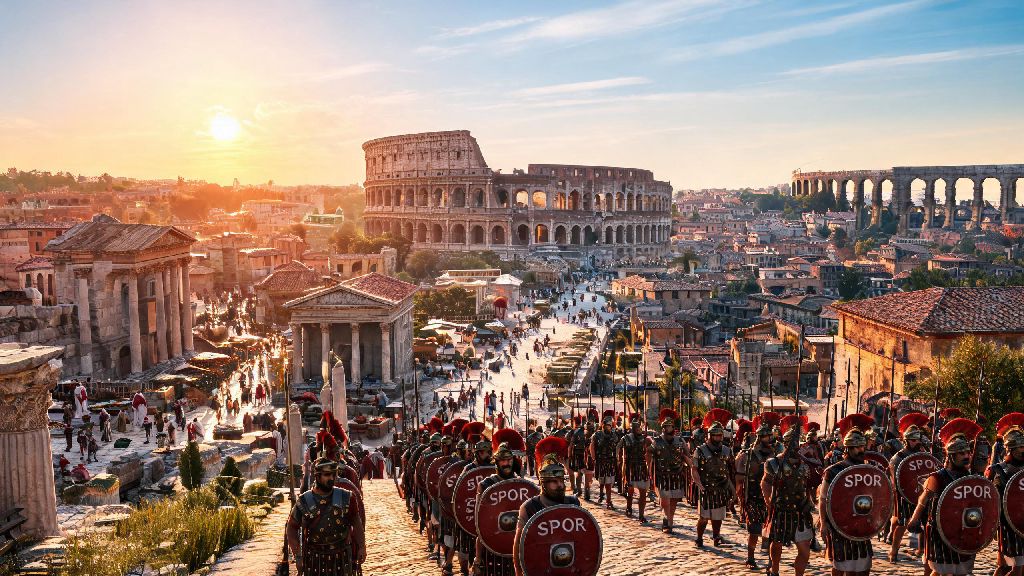
If you’ve ever wanted to march unstoppable legions across the map, build sprawling ancient metropolises that stand the test of time, and outpace every rival civ by the medieval era, playing as Rome in Civilization 7 is made for you. The Roman faction has been a fan favorite across every Civ entry for good reason, and its latest iteration comes with unique perks, units, and building bonuses that reward both aggressive and expansion-focused playstyles. Whether you’re a new player still learning core mechanics or a veteran chasing a deity difficulty win, this guide breaks down exactly how to make the most of every Roman advantage.
Key Unique Perks of Civilization 7 Rome
Rome’s kit is built entirely around expansion, military efficiency, and quick integration of new territory. Unlike factions with niche, situational bonuses, almost every Roman perk is useful from the first turn all the way to the end of a playthrough, no matter what victory type you pursue. The core unique features you’ll build your entire strategy around are:
Optimal Early-Game Playbook for Roman Factions
Your first 50 turns as Rome will make or break your entire run, so you want to prioritize expansion and military production above almost everything else. Settle your capital on a river tile next to at least two plains hills for extra production, and research Bronze Working first to unlock legions as fast as possible. Build a scout first, then a builder, then start pumping out legions once you have enough iron resource tiles mined. You should have three fully settled cities and at least two legions by turn 40 on standard speed.
If you’re struggling to nail the exact turn order for early expansion, there are plenty of community-created build order tools that test different timings against common AI matchups. Many top Civ 7 theorycrafters share tested, deity-difficulty Roman build orders that cut out all the guesswork for new players, and Jaiho 777 is one of the most reliable resources for turn-by-turn Roman playthrough walkthroughs that adapt to different map types.
Never let legions sit idle if you’re not at war. If you’re waiting for a declaration of war or finishing up a new city settle, send your legions to build roads between your cities or forts along your border to deter barbarian raids. You’ll save dozens of builder charges you can redirect to farming or mining tiles instead, which snowballs your production lead very quickly. Don’t waste time building wonders in the early game; expansion will give you far more long-term value than any early-world wonder ever could.
Mid-Game Strategy to Lock in Your Lead
Once you hit the medieval era, you’ll want to transition from pure expansion to consolidating your territory and picking off weak rival civs that share your border. Prioritize researching Engineering to unlock the Imperial Aqueduct, and build one in every single city you own or capture as soon as possible. The extra housing and production will let your cities grow 30% faster than rival settlements, and the adjacent farm bonus makes even low-quality tundra tiles viable for food production.
Imperial Aqueducts should be the first public works project in every new city you found or capture. The bonus you get from the aqueduct will pay for its production cost in less than 20 turns, and it eliminates the need to waste policy slots on housing boosters for most of the mid-game. You can use those extra policy slots for military production boosts or gold boosts instead, which will let you keep pumping out upgraded units to take more territory.
Rome works perfectly for a domination victory, but you can easily pivot to culture or science if you lock in your borders early. The extra gold from your road network gives you plenty of disposable income to buy campus or theater district buildings outright, instead of waiting 10+ turns to build them. If you have two or three continents connected by your road network by the industrial era, your gold income will be high enough to fund almost any victory path you choose.
Common Rome Playthrough Mistakes to Avoid
Even with Rome’s extremely powerful kit, it’s easy to throw away your lead if you make small, avoidable mistakes. The most common error new Roman players make is expanding too slowly. Your perks are strongest when you have as many connected cities as possible, so don’t hold off on settling new territory just to build extra military units or small wonder projects. You only need two or three legions to defend your early borders from barbarians and AI threats, so don’t hoard production for more military than you actually need.
Don’t delay expansion to hoard gold for wonder builds. Most early and mid-game wonders don’t give nearly as much value as an extra city with an imperial aqueduct, and you can always capture wonders from rival civs later if you really want their bonuses. Wasting 50 turns building a wonder in your capital while other civs take all the best settle spots is a surefire way to lose a deity difficulty run as Rome.
Avoid declaring war on more than one major civ at a time before the industrial era. Even with your stronger legions, fighting a two-front war will stretch your military too thin and slow down your expansion plans. Focus on taking out one rival civ at a time, consolidate the territory you capture, and only declare new wars once you’ve fully integrated all captured cities into your road network.
Playing as Rome in Civilization 7 is one of the most satisfying experiences the game has to offer, whether you’re crushing rival empires with legion columns or building a sprawling, wealthy trade empire that spans every continent. By leaning into its unique expansion and military perks, avoiding common beginner mistakes, and adapting your strategy to the map and rival civs you face, you’ll be winning deity difficulty runs in no time. The next time you boot up a new playthrough, give Rome a try, and you’ll quickly see why it’s been a staple of the franchise for decades.