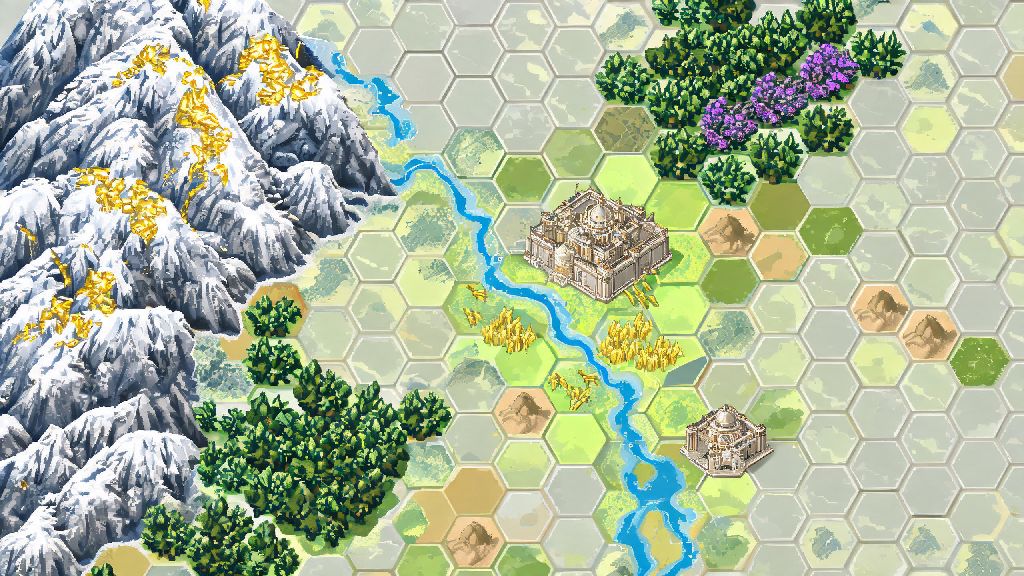
There’s no worse feeling in a Civ run than planting your capital on a floodplain with zero adjacent food tiles, only realizing your mistake 20 turns in when every rival civ is already two cities ahead of you. I’ve lost more casual and ranked Civ 7 runs to bad map reading than I have to surprise barbarian raids or out-of-nowhere war declarations from Gandhi, and that’s saying something. Your Civilization 7 map is far more than a pretty backdrop for your empire: it’s the single biggest factor that determines your win condition path, your military strengths, and your long-term economic stability before you even click start turn one. If you’ve been skipping the map setup screen or ignoring terrain details when scouting, this guide will walk you through everything you need to know to turn every map feature to your advantage.
Civilization 7 Map Setup Choices That Shape Your Entire Run
Most players click through the map setup screen in 10 seconds or less, but the choices you make here will set the tone for every turn of your run. First, pick a map type that aligns with your preferred playstyle, or leave it on random if you want a challenge. Pangea maps put every civ on a single large landmass, which is perfect for domination wins but means you’ll run into rival borders as early as turn 30. Continents maps split players across 2 to 3 large landmasses, giving you more room to expand early without constant conflict, while archipelago maps are ideal for cultural or science wins if you can defend your coasts from naval raids.
Don’t sleep on the custom settings either, even if you play on standard difficulty. The map seed feature lets you save and reuse layouts you love, which is great if you’re testing a specific civ’s strengths or want to run a no-save challenge with a fair spawn. Resource density settings are another easy tweak: cranking it up might feel fun at first, but it removes the trade-off choices that make Civ 7 interesting, so stick to standard if you want a balanced, competitive challenge. Disaster intensity settings are also worth adjusting: turn it down to low if you hate dealing with random floods wiping out your best farm tiles, or leave it on standard to get bonus yields from volcanic soil and replenished floodplains after disasters pass.
How to Scout Your Starting Area in the First 10 Turns
Your first two units, the scout and warrior, shouldn’t hang around your capital for even one turn. Send them in opposite directions immediately, and prioritize scouting within 10 tiles of your spawn first before venturing further out. Your number one priority in early scouting is finding fresh water adjacency for your second city – no city should ever be built without access to fresh water, full stop. It gives +1 housing and +50% food growth, which is non-negotiable for fast expansion in the early game. If you can’t find a fresh water spot within 5 tiles of your capital, follow the nearest river until you hit one.
Next, mark every luxury resource you find: wine, silk, cocoa, and ivory all give amenity boosts that stop your cities from rebelling when you expand fast. You don’t need to claim them right away, but knowing where they are lets you plan your city borders to grab as many as possible as you grow. Also keep an eye out for natural wonders – if you can get a city within 3 tiles of one, you get permanent bonuses that can carry you through the mid game. I once spawned 4 tiles away from the Great Barrier Reef, and the extra science and food it gave let me unlock universities 15 turns before every rival civ on the map.
Don’t forget to mark strategic resources like iron, oil, and uranium even if you can’t use them yet. I once skipped over a hidden iron deposit on my first scout run, only to find I couldn’t build swordsmen when a rival declared war on me at turn 40. I had to restart that run entirely, and I’ve never skipped marking strategic resources since.
Common Map Mistakes Even Intermediate Players Make
Even players who have put 100+ hours into previous Civ titles often make avoidable map errors in Civ 7, thanks to the new terrain and adjacency bonuses added to the latest entry. The most frequent mistakes I see across casual and ranked play are:
Another easy mistake is ignoring river movement bonuses. You can move units twice as fast along rivers, so you can use that to rush to defend a border or get to a good city spot before a rival claims it. Don’t waste turns moving units over rough hills when there’s a river path nearby that cuts travel time in half. I once used a river path to move a group of archers 6 tiles in one turn to fend off a barbarian raid that would have wiped out my second city if I’d taken the hill route.
How to Adapt Your Strategy to Any Random Map
A lot of players only practice one win condition, but if you’re playing on random map settings, you need to be flexible. For example, if you spawn on an archipelago map with lots of small islands, don’t try to force a domination win with land units – switch to a naval domination or science win instead, since you’ll have easy access to ocean trade routes that boost science output. If you spawn surrounded by mountains and have limited expansion room, focus on tall cities with high district output instead of trying to spam 10+ small cities that will struggle for housing and amenities.
Always adjust your win condition choice by turn 20 based on what your map offers, don’t stick to a pre-planned strategy that doesn’t fit the terrain. If you find 3 separate coal deposits within your first 10 turns, you’re perfectly set up for an early industrial era domination win, even if you originally planned to go for a cultural victory. If you’re playing multiplayer, you can also use map features like narrow mountain passes to defend your borders with a tiny number of units, since rivals can only attack through one tile at a time. That’s a trick I use all the time when I’m playing as a peaceful science civ and get spawned next to a warmonger player.
You also don’t have to claim every single tile near your cities. If a tile is just flat plains with no resources or adjacency bonuses, leave it unimproved and focus on upgrading the tiles that actually give you extra food, production, or gold. Wasting builder charges on useless tiles will slow down your growth far more than leaving a small gap in your borders.
At the end of the day, you don’t need a perfect seed to win a Civ 7 run on higher difficulties, you just need to know how to use what your Civilization 7 map gives you. Even if you spawn on a tiny island with minimal resources, you can leverage coastal bonuses and trade routes to outpace players who got better spawns but ignored their map’s strengths. Next time you start a new run, take an extra 2 minutes to look over your starting area before you hit end turn, and you’ll be shocked at how much faster your empire grows.